Multi-agent automation
Forty to seventy node pipelines where specialised agents parse, score, gate and route real business documents. Structured output parsers on every agent, so nothing downstream depends on free text.
I build multi-agent systems that read the documents, score the candidates, redact the contracts and answer the calls, plus the consoles the operators actually run them from.
Scroll to enter the sector
Each strip is a working practice, not a certificate. The systems behind them are further down this page, with their node graphs.
Forty to seventy node pipelines where specialised agents parse, score, gate and route real business documents. Structured output parsers on every agent, so nothing downstream depends on free text.
Agents that answer, qualify, book and hand off — in English and in Telugu. Prompt compilation, turn-taking, post-call handoff into CRM, and a deployment recipe with a verify gate that has to go green before a client gets the keys.
Grounded question answering over a firm's own documents. The index is fed by an intake agent and queried by a Q&A agent, so the answer path never runs unretrieved.
The console on top of the pipeline. Risk registers, candidate pipelines, intake monitors, campaign engines, plus the marketing sites that sell them.
Seven legs. Two of them were losses, and those are the ones that set the heading.
I studied the creators who had it instead of just consuming what they made, taught myself video editing, and earned my first money with a skill nobody had handed me.
A skill converts to income faster than a credential does.I stopped clipping other people's work and started making original short-form. Two channels hit ten thousand subscribers each inside ten days. Both were later taken down.
Never build only on rented land.I learned trading properly, put real money on the line, and lost some of it. The lesson landed harder than a win would have: without capital, leverage multiplies nothing. So I walked away, deliberately, not defeated.
Build cashflow before chasing leverage.I learned Python, then went deep into AI agents and workflow automation. I had shipped dozens of small and medium automations before it occurred to me that they were sellable. Then I learned retrieval, so the agents could answer from documents instead of from memory.
Build enough of them and the pattern becomes a product.Automation for law firms and CA firms. Automated CV screening with a custom scoring engine for recruitment. And, with a partner, an AI operating system for brokerage and property management: full stack, in production, not a demo.
Shipping into someone else's operations changes what you build.I trained myself on cold email and cold calling, still sharpening both daily, and studied sales and copywriting properly. Then I took a SaaS from idea to launch end to end, as one person leveraged by AI.
The distribution is half the build.The focus is singular: AI voice agents. One field, taken all the way until it produces results, then the next. The pattern hasn't changed. Learn, build, sell, repeat, faster each time.
Current heading. Everything above is how I got the altitude.Every canvas below is a screenshot of the real workflow running on my n8n instance. Every console is the real interface, captured live.
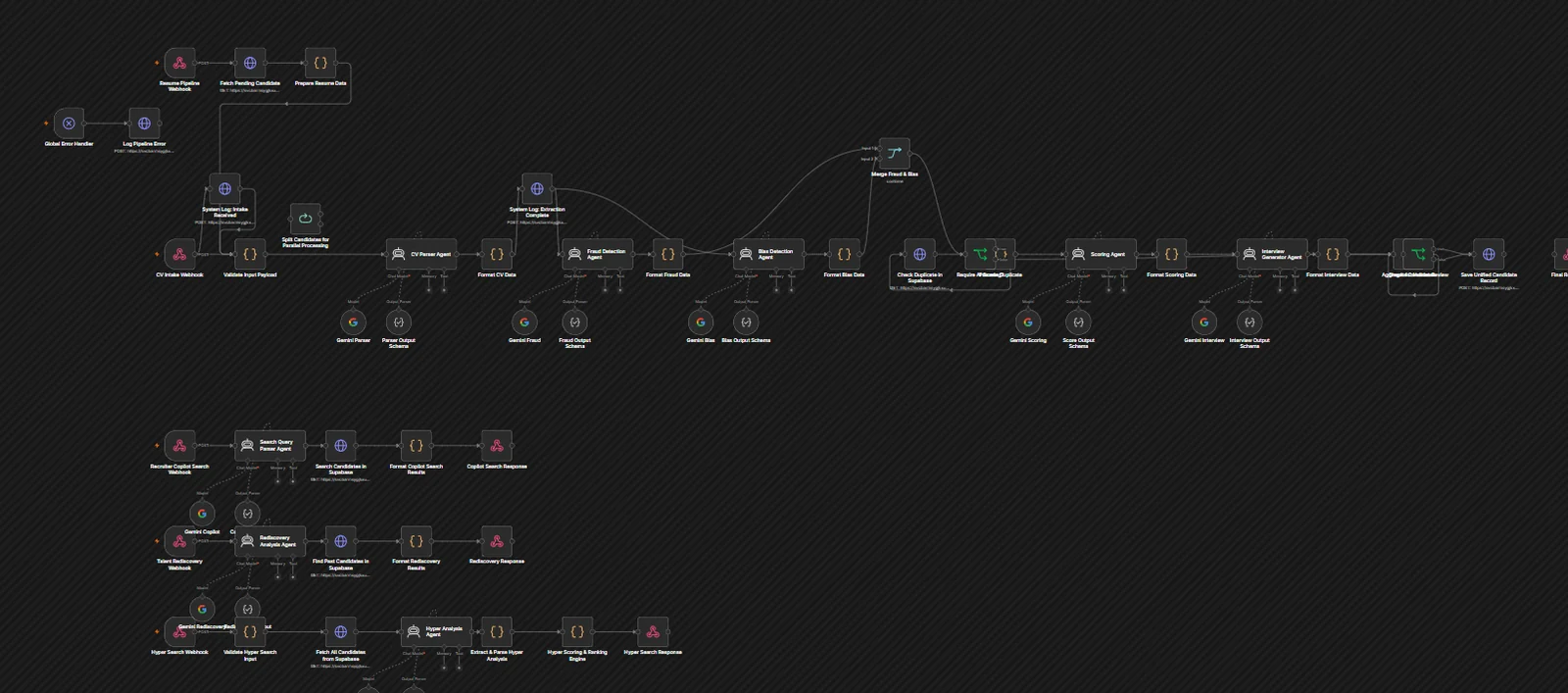
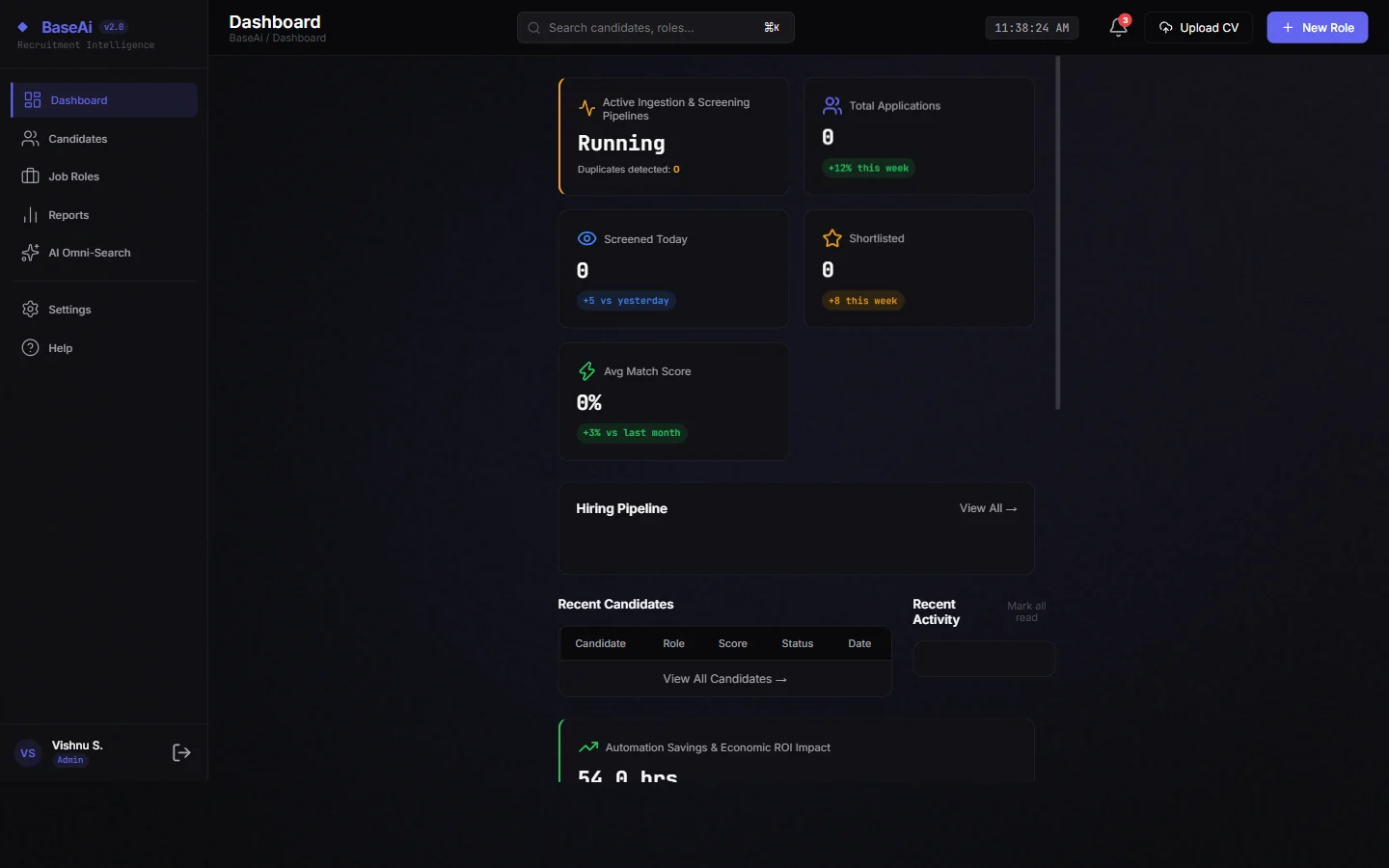
Ten specialised agents take a CV apart, and none of them are allowed to answer in prose.
A CV arrives by webhook. A parser agent extracts it into a schema. A fraud detection agent looks for fabricated history. A bias detection agent strips the signals that shouldn't influence a decision. A scoring agent ranks against the role, and an interview generator writes the questions. Each of those runs its own Gemini model behind a structured output parser, so the next node gets typed fields, never a paragraph to re-parse.
Around that spine sit three more pipelines: a recruiter copilot that answers plain-language candidate searches, a rediscovery pass that re-scores past applicants against new roles, and a hyper-search ranking engine over the whole Supabase pool. A global error handler logs anything that falls out.
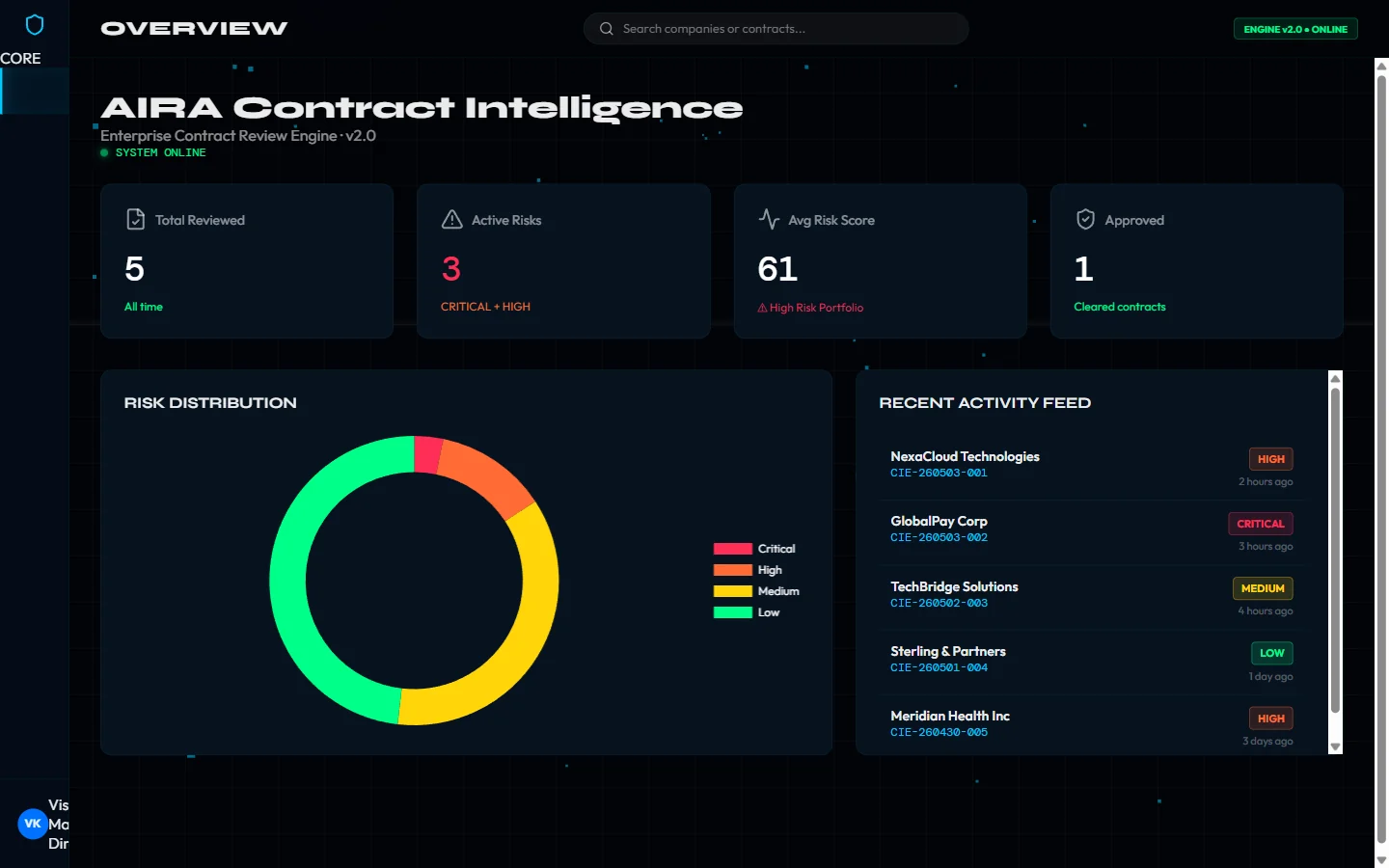
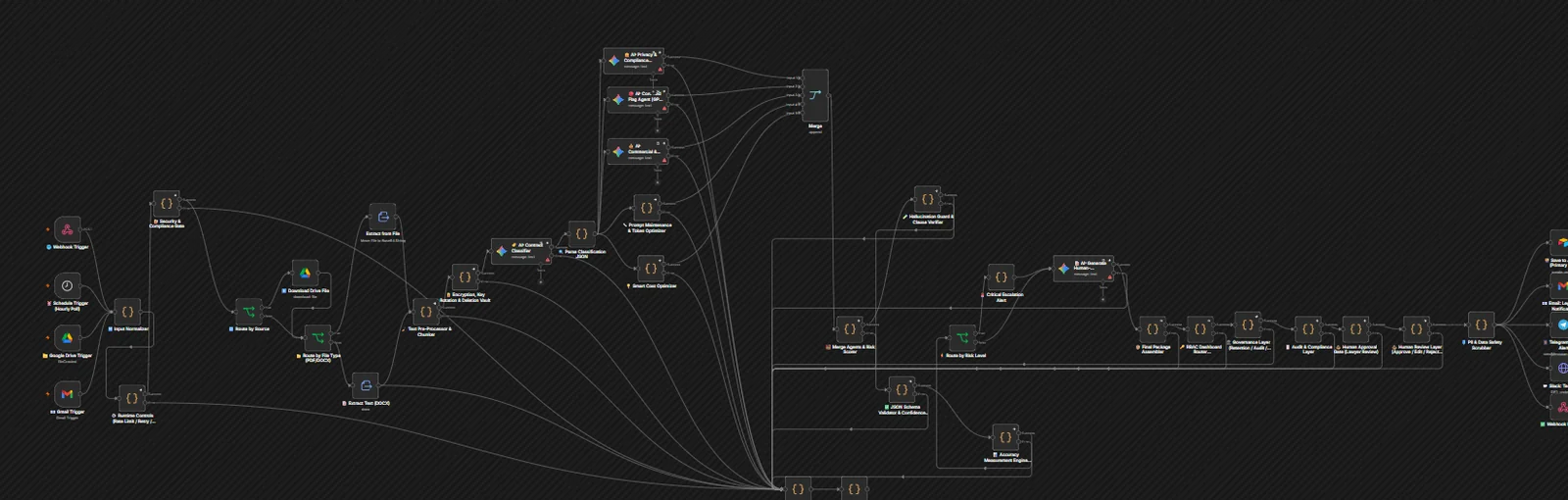
Reads the contract, redacts the identity, flags the red lines, routes the risk.
Triggered from Drive, Gmail or a schedule. The document is extracted, then twenty-two code nodes carry the redaction and rule logic before anything reaches a model. The secure edition exists because law firms cannot post client identity into an API. Five model passes handle clause classification and red-flag detection, and the result lands in an Airtable register with Telegram and Gmail escalation for anything critical.
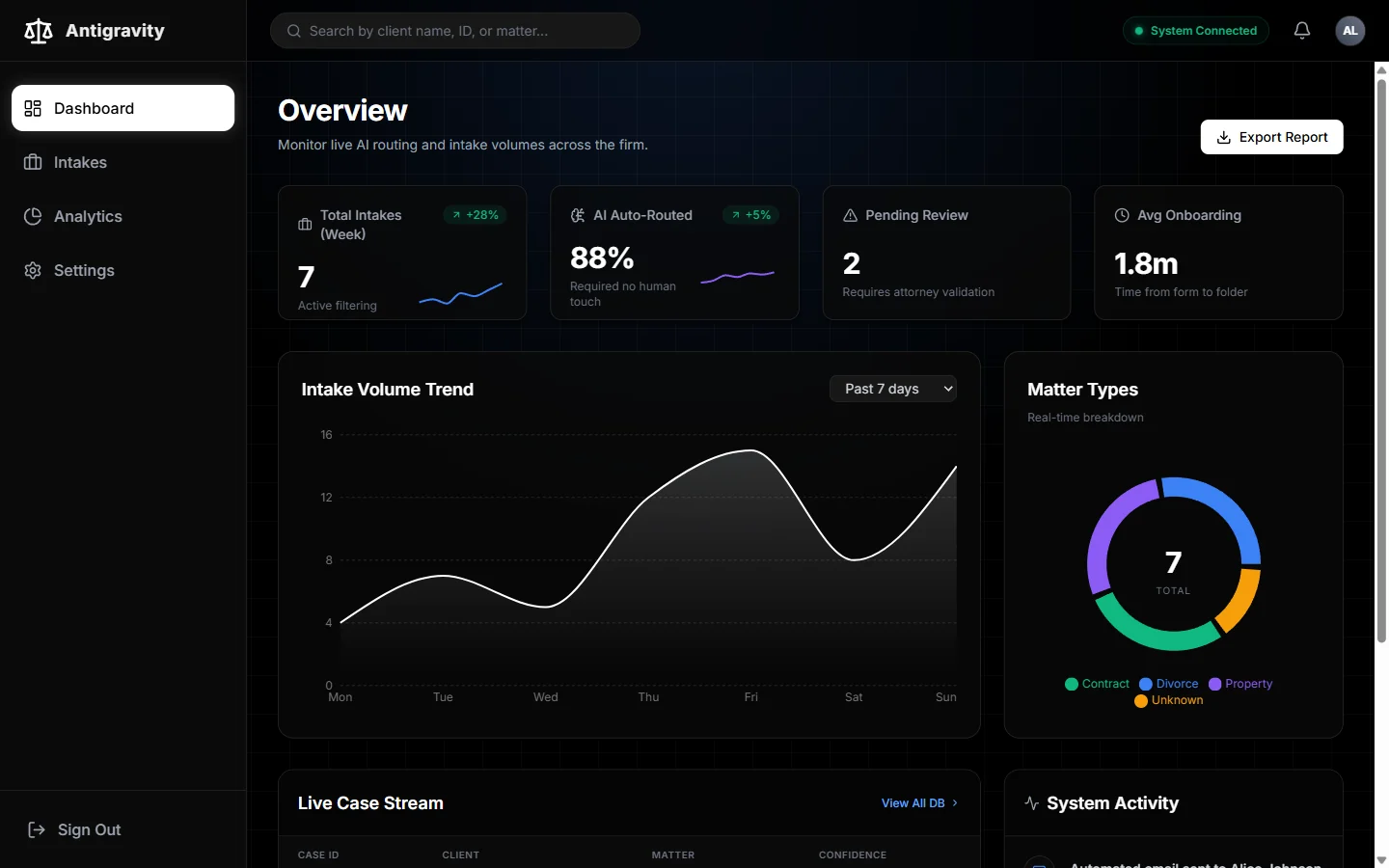
On top of it sits an operator console with a WebGL sector background, a risk distribution ring, a live activity feed, and a decision row: approve, escalate to counsel, or reject.
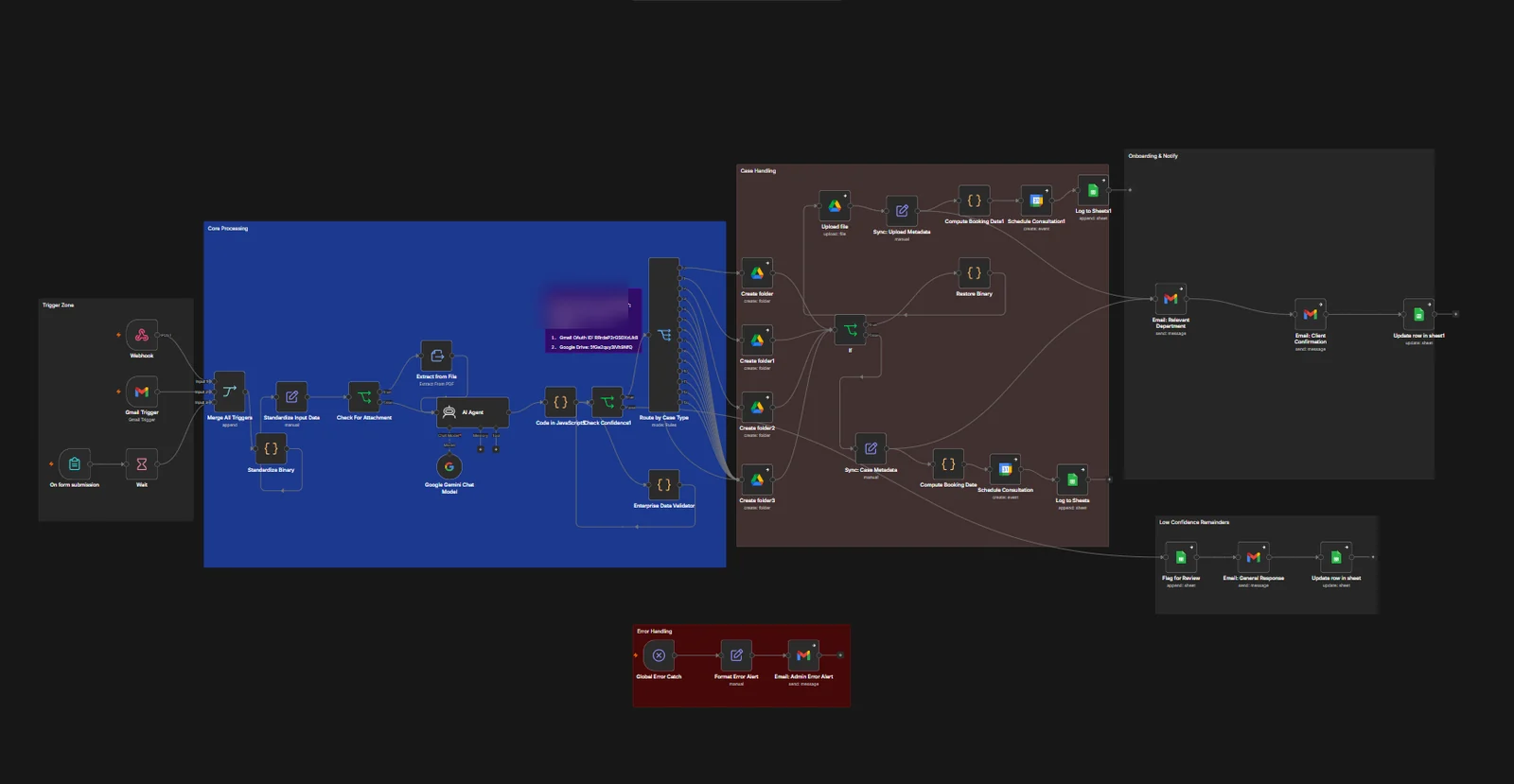
A new matter arrives and onboards itself, unless the model isn't sure. Then a human gets it.
Form submissions and inbound email merge into one path. Attachments are extracted from PDF, an agent classifies the matter type, and a confidence gate decides what happens next. Above the threshold it proceeds: Drive folders are created for the case, a consultation is booked on calendar, the client gets a confirmation, the relevant department gets a brief, and Sheets logs the row. Below it, the matter is flagged for review and a holding response goes out instead.
The canvas is organised into labelled zones (trigger, core processing, case handling, onboarding, low-confidence reminders, error handling) because someone other than me has to be able to read it.
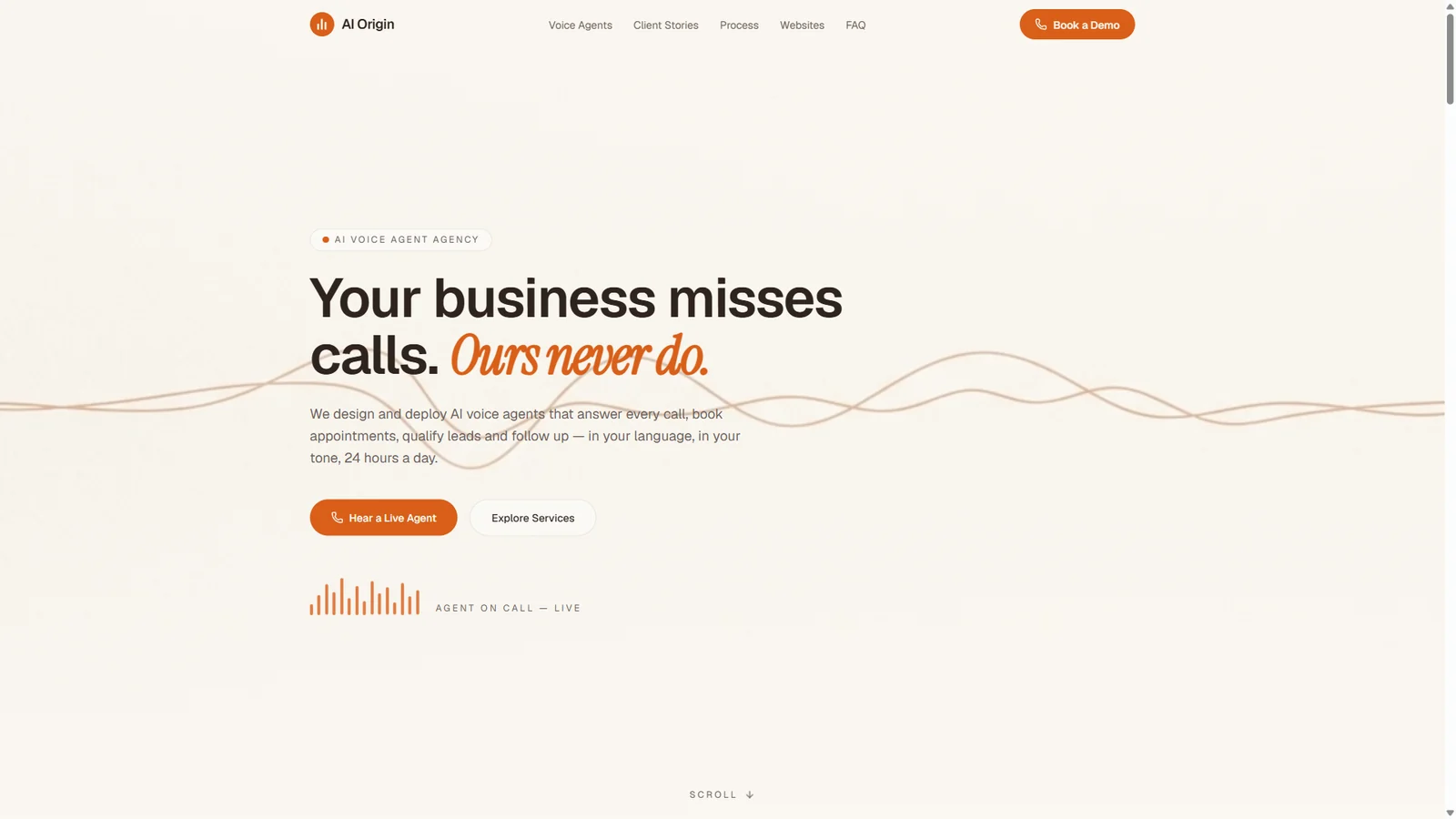
An agency for AI voice agents, the stack that runs them, and the site that sells it.
The front is a Next.js site with a booking flow and a voice showcase, built around one line: your business misses calls, ours never do. Behind it is the part that matters: a thirty-one node backend wiring the client dashboard to Supabase, to Dograh for the agent runtime, and to a Vobiz voice stack for telephony.
A prompt builder compiles agent instructions through Groq and pushes them to Dograh. A separate deployment recipe makes the whole thing reproducible on a Coolify VPS, with a verify command that has to exit clean before a client is handed the keys. A red verify means not delivered, whatever the dashboard says.
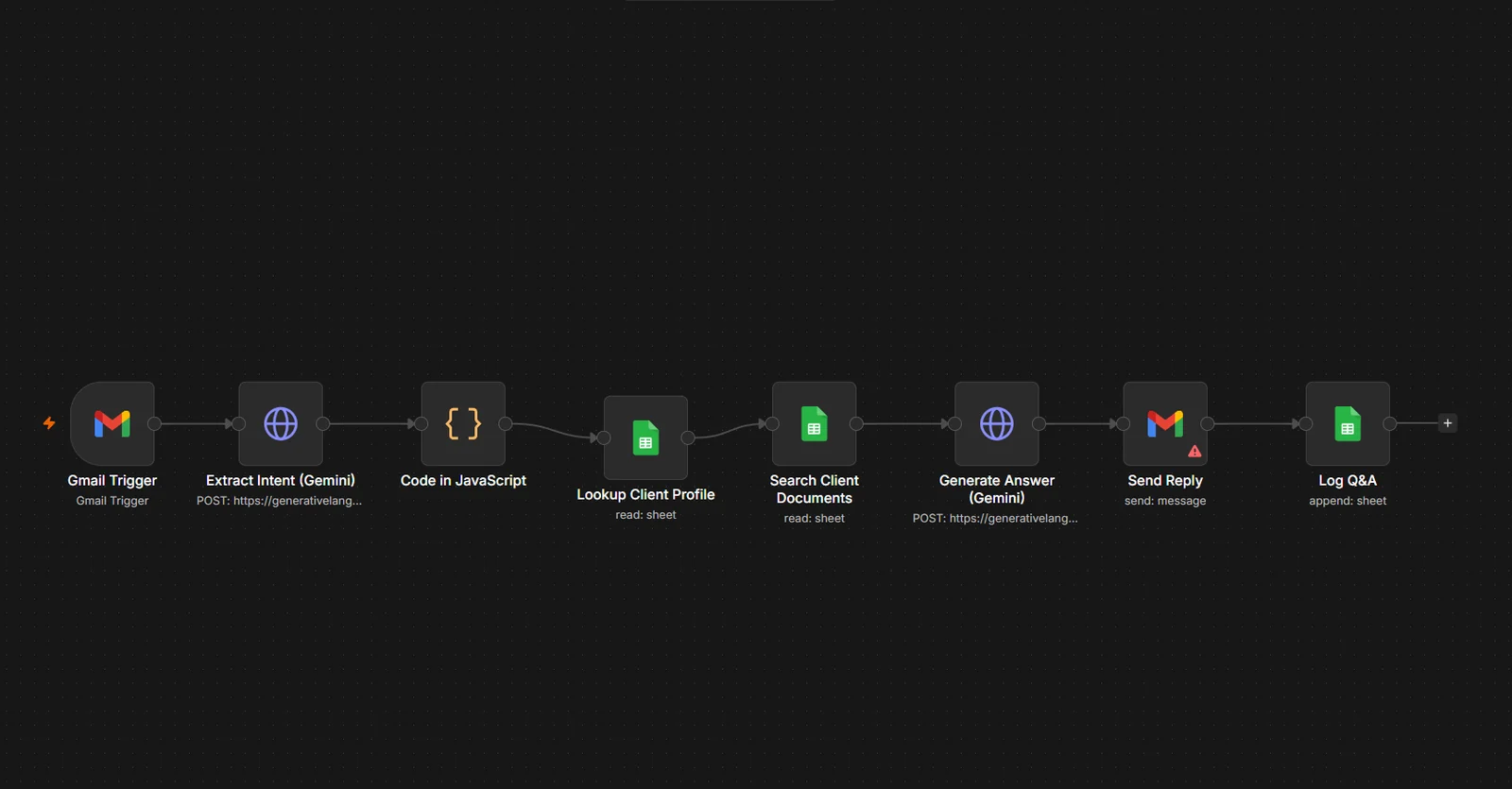
Clients email a question. The agent answers from the firm's own documents, or it doesn't answer.
A Gmail trigger catches the question, retrieval runs over the firm's indexed filings and correspondence, and the reply is composed only from what came back — then sent in-thread and logged. There is no path where the model answers from memory, which is the entire point when the question is about a specific client's specific filing.
It doesn't run alone. A document intake agent keeps the index fed from inbound email and Drive, and a compliance deadline monitor watches the calendar side, so the corpus the answers come from stays current instead of decaying.
The interesting part isn't sending. It's the listener that stops the sequence the moment somebody replies.
The dispatcher runs on a schedule, rotates five Gmail accounts so no single mailbox carries the volume, and writes a unique opening line for every lead with a model before prepending it to the template. Three follow-up stages run off the same sheet.
In parallel, five IMAP listeners sit on those inboxes around the clock. A reply halts that lead's sequence immediately and writes the reply text back to the sheet, so nobody who has already answered ever gets a follow-up. That's the failure mode this engine was built to remove.
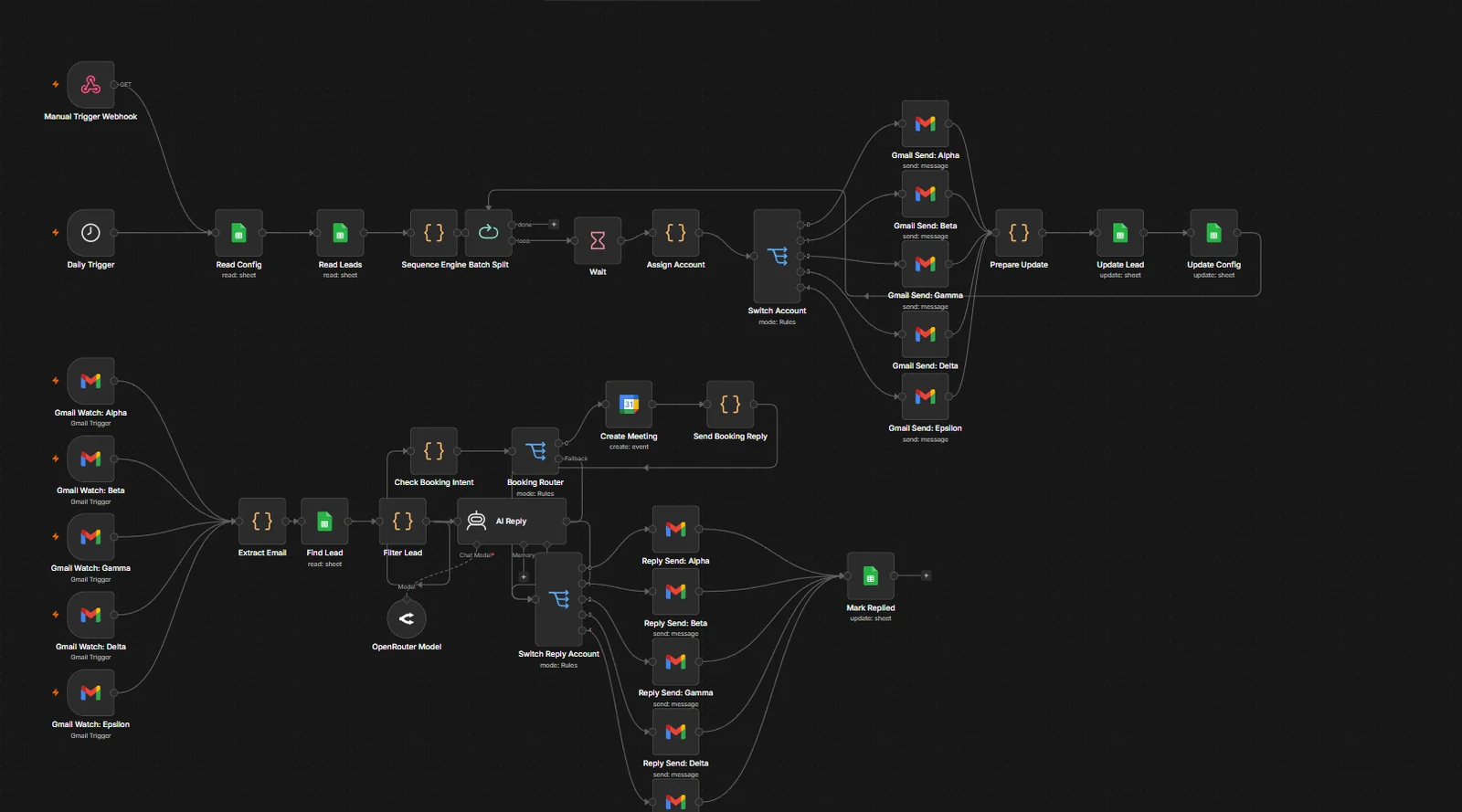
Fourteen more canvases, captured from the live instance. Node counts are real; the ones marked live are running right now.
Smaller systems, client sites, and tooling. All built, all real.
Short-form production, run end to end: hook, retention card, overlay stack, edit. Two channels, both operated as pipelines rather than uploads.
Short-form channel with a full production stack on disk: per-video hook, scroll-stopper, a like / comment / share / subscribe overlay set, and the cut.
Second channel on the same production system. The discipline that came out of both is the one that runs underneath every automation on this page: build the repeatable process, then run volume through it.


VJ—01OPERATOR
I take on automation systems, AI voice agents and the consoles that run them. If you have a process where the handoffs are where the time dies, that's the one I want to see.